Portrait of Marzhana

Marzhana

I design what doesn’t have a playbook yet — building new systems, simplifying complexity, and challenging the patterns everyone else keeps copying across AI-native and category-defining products.

Working mode
  1. 01Question defaults
  2. 02Trace dependencies
  3. 03Make it loveable

Forbes 30U30

UX Design Awards nominee

  • Former CDO & co-founder @Ratio
  • Former Founding Lead Product Designer @Pluto
  • Led 5+ YC-backed startups valued at $300M+
About meMy processHow I think
@EmailinLinkedIn◎Instagram≡Substack

Ratio

01/08

Ratio

02/08

0→6 core products. The whole scientific infrastructure. 92 countries. 32K total visits. $0 paid marketing.

Company

Ratio is rebuilding the infrastructure of academic publishing, discovery, and scientific collaboration as one connected ecosystem.

My impact

As co-founder and Chief Design Officer, I led product and design from an early thesis to six connected products and four mobile modules. I built the product architecture and adaptive design system while also driving brand, organic growth, hiring, culture, and community.

Highlight

03/08

Challenge the model from first principles

Academic publishing still relies on infrastructure and assumptions created more than 30 years ago.

With my co-founders, I questioned the model itself — how research is published, discovered, and connected — then translated a new model into a coherent product ecosystem.

Highlight

04/08

Build the company around the product

We treated product, brand, distribution, talent, culture, and scientific community as one connected system.

This created credibility, organic demand, and access to exceptional talent before we had a marketing budget.

Highlight

05/08

Make creativity the growth engine

With no paid marketing budget, creativity had to do more than decorate the brand.

I connected product launches, campaigns, content, and community into one distinctive system — turning complex scientific ideas into moments people wanted to notice and share.

Highlight

06/08

AI Peer Review. Clone of scientists. Got 9/10 review on quality from 75+ researchers over the world.

Highlight

07/08

Build scale before scale arrives

I created an adaptive design system from day one.

Shared components, responsive rules, and product-level patterns allowed six core products and four mobile modules to evolve in parallel. Even while covering wider co-founder responsibilities, design never became the blocker.

AI workflow: I used AI across research, content, exploration, and production to reduce repetitive work and protect time for higher-impact decisions.

Highlight

08/08

Overview01 / 08

Pluto

01/07

Pluto

02/07

Pre-MVP → global top 50 → acquisition.

Company

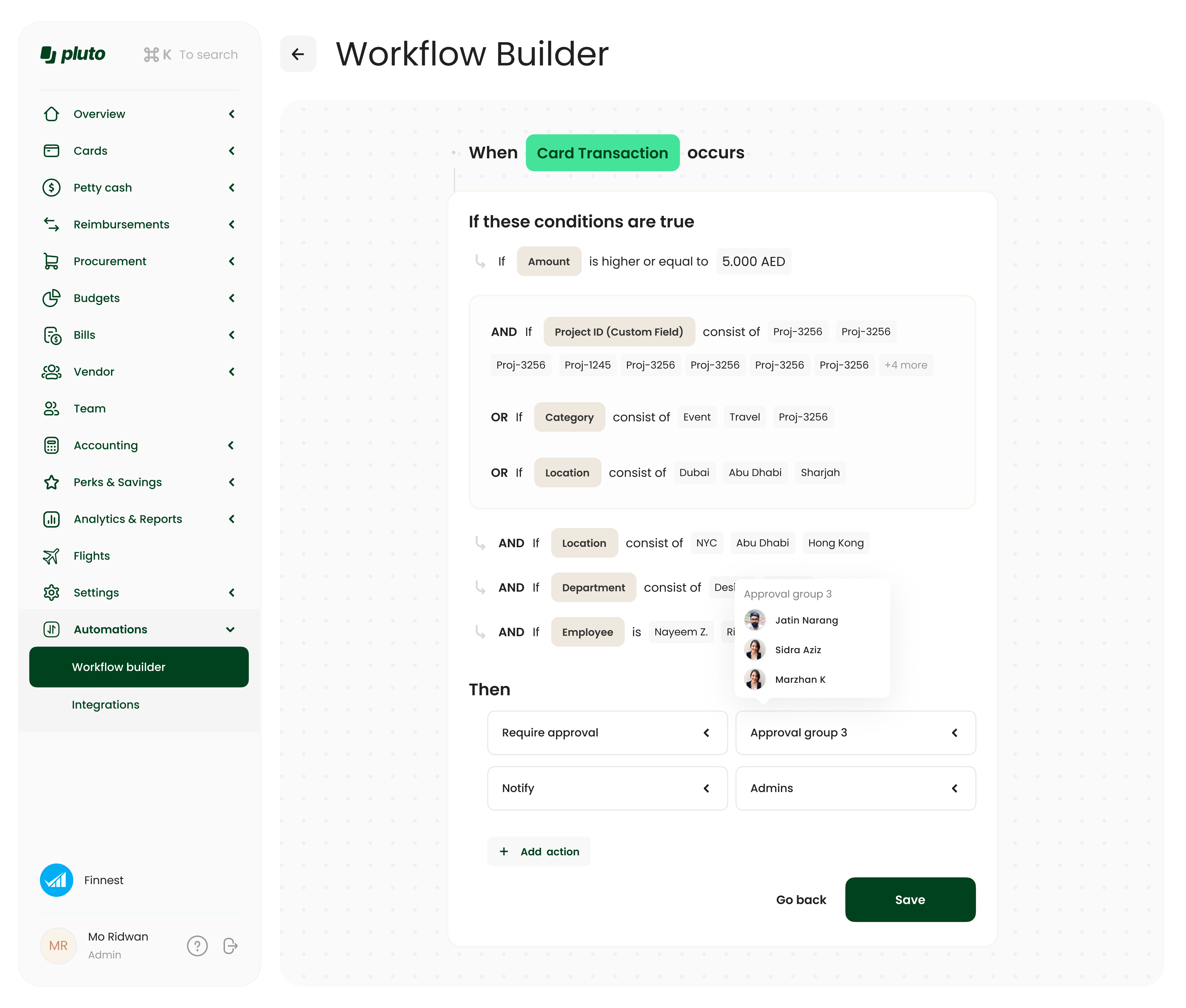
Pluto is financial management software for corporations and businesses, combining payments, spending controls, permissions, and financial operations in one platform.

My impact

I joined pre-MVP and led product design through launch and rapid scale.

I defined the product architecture and roadmap, translated complex corporate finance rules into usable workflows, built the Design Ops system used by internal teams and external agencies, and kept seven teams aligned on the product across time zones.

Pluto became a global top-50 fintech and was later acquired by a fintech unicorn.

Highlight

03/07

Model the system before designing the screens

Corporate finance has many connected parts: companies, roles, permissions, payment products, actions, approval rules, dependencies, and edge cases.

I mapped those relationships into one shared product model. Teams could see the downstream impact of a decision before it reached production, allowing us to move quickly without breaking connected workflows.

Highlight

04/07

Turn Design Ops into company infrastructure

At our speed, lost context was more dangerous than slow execution.

I built the file architecture, component ownership model — growing the system from 124 to 2,100+ components — decision history, documentation, handoff standards, and workflows for both internal teams and external agencies.

Anyone could find the latest answer, understand why a decision existed, and continue working without waiting for me. Design became a source of truth across the company.

Highlight

05/07

Align seven teams without adding meetings

Every product decision crossed design, engineering, compliance, operations, customer support, customer success, and founders — often across different time zones.

I created clear async artifacts, ownership rules, and decision paths. Dependencies surfaced early, settled questions stayed settled, and work continued without requiring everyone to be in the same meeting.

Highlight

06/07

Highlight

07/07

Web story

Pluto landing page.

Pluto product dashboard

Overview01 / 07

hi.com

01/08

Y Combinator startups and global products

02/08

Fast-paced. Two fintech products at once. Four designers led.

Overview

At an award-winning European agency, I had an opportunity to be part of product design for global organizations and brands including NASA, BMW, and McDonald’s — alongside high-growth startups.

My impact

I led design for 5+ Y Combinator-backed startups, including Cushion.ai, and worked across products such as ZeroDown, Tola, Marcel.art.com, and Hi.com.

I shipped 15+ product features in six months, contributed to Hi.com as it scaled beyond 3M users, and managed a team of four designers — helping interns grow into mid-level contributors.

Highlight

03/08

Make Figma operational infrastructure

For me, Figma hygiene is not about keeping files pretty. It is about keeping the whole team fast.

Clear naming, reusable components, versioning, ownership, and predictable file structure allowed designers, engineers, clients, and agencies to enter a project and understand it without a guided tour.

Highlight

04/08

Use frameworks as tools, not rituals

I learned methods from both enterprise teams and early-stage startups. The important skill was learning when each method was useful — and when it was creating unnecessary work.

I keep the parts that reduce risk or increase clarity and remove the rest. This preserves rigor without slowing delivery.

Highlight

05/08

Make the process fit the problem

Following the same process for every project creates activity, not progress.

I developed a modular approach based on product stage, uncertainty, team maturity, and decision cost. Discovery expands when risk is high and compresses when evidence already exists.

The process serves the outcome — not the other way around.

Highlight

06/08

Cushion.ai

Fintech, AI, marketplaces, consumer products, and enterprise software — different constraints, one consistent bar for clarity, systems thinking, and execution.

Highlight

07/08

Overview01 / 09